
Showing posts with label Transportation. Show all posts
Showing posts with label Transportation. Show all posts
Saturday, March 5, 2011

Downtown need a makeover? More cities are razing urban highways
 |
Construction equipment lines the old Interstate 195 in Providence, R.I. The city has closed this highway, which once ran through the downtown core. Chuck Aube/RIDOT |
Removal of aging highways is a strategy some cities are using to try to boost their downtown districts.
New Haven, Conn.In New Haven, Conn., a mistake of the past – one that displaced hundreds, razed a neighborhood, and physically divided a city – is finally set to be rectified: A highway is going to be demolished.
Some people in New Haven have been waiting to see this for 40 years, ever since it became clear that a modern roadway slicing through the heart of downtown would not bring the hoped-for suburban shoppers and revitalization. That waiting list is long, it turns out, as cities across the United States look to erase some of the damage from urban highway construction of the 1950s and '60s – tearing up or replacing the roadways and attempting to restitch bulldozed neighborhoods.
"For people who live and work around [urban highways], they always had huge negative side effects: They broke up the urban fabric, were noisy, and divided cities," says Ted Shelton, a professor of architecture at the University of Tennessee who has studied urban highway removal. Removing roadways presents an opportunity for wiser, gentler redevelopment that can – if all goes well – add vibrancy and livability to areas around city centers. READ MORE
Tuesday, February 8, 2011
Transportation: Obama's High Speed Rail Proposal
 |
| Reuters – U.S. Vice President Joseph Biden (R) and U.S. Secretary of Transportation Ray LaHood |
An initial $8 billion in spending will be part of the budget plan Obama is set to release Monday. If Congress approves the plan, the money would go toward developing or improving trains that travel up to 250 miles per hour, and connecting existing rail lines to new projects. The White House wouldn't say where the money for the rest of the program would come from, though it's likely Obama would seek funding in future budgets or transportation bills.
Obama's push for high-speed rail spending is part of his broad goal of creating jobs in the short-term and increasing American competitiveness for the future through new spending on infrastructure, education and innovation. During last month's State of the Union address, Obama said he wanted to give 80 percent of Americans access to high-speed rail within 25 years. READ MORE
Preparing for climate change 'will boost economy'
An article on the BBC citing many shortcomings of current infrastructure in a future affected by climate change. They note how large sections of society are very energy dependent, specifically internet businesses, mobile phones, and transportation (incl. roads).
Preparing for climate change 'will boost economy'
"Early preparation for climate change impacts would bring economic benefits to the UK, say engineers in a report commissioned by the government."
http://www.bbc.co.uk/news/science-environment-12384389
BBC News, 7 February 2011
Preparing for climate change 'will boost economy'
"Early preparation for climate change impacts would bring economic benefits to the UK, say engineers in a report commissioned by the government."
http://www.bbc.co.uk/news/science-environment-12384389
BBC News, 7 February 2011
Wednesday, February 2, 2011
Transportation
Here are some resources that our speaker, Kay Chase, referred to during her talk on Tues, Feb 1
Kalamazoo Friends of Transit
Friends of Transit for Kalamazoo County, formed in 2005, is an alliance of 49 organizations and 70 individuals that believe public transit is vital for economic growth and community well-being by providing access to jobs, medical care, education, shopping, recreation, religious and civic events.
Mission
To work for the creation of a countywide transit system that will provide accessible, affordable, safe and convenient public transit for all people of Kalamazoo County.
Vision
National Association of Railroad Passengers
The mission of the National Association of Railroad Passengers is to work for a modern, customer-focused national passenger train network that provides a travel choice Americans want.
NARP is the largest national membership advocacy organization for train and rail transit passengers. We have worked since 1967 to expand the quality and quantity of passenger rail in the United States. Our work is supported by around 20,000 individual members.
Membership, which is free, provides discounts on Amtrak travel.
American Public Transportation Association
APTA members serve the public interest by providing safe, efficient and economical transit services, and by improving those services to meet national energy, environmental, and financial concerns. Over ninety percent of passengers using transit in the U.S. and Canada are carried by APTA members.
APTA members are public organizations that are engaged in the areas of bus, paratransit, light rail, commuter rail, subways, waterborne passenger services, and high-speed rail. Members also include large and small companies who plan, design, construct, finance, supply, and operate bus and rail services worldwide. Government agencies, metropolitan planning organizations, state departments of transportation, academic institutions, and trade publications are also part of our membership.
APTA has six different categories of membership, and offers a "Basic option" to certain of those. See the "Membership" link for full description.
APTA members are encouraged to participate in, contribute to, and benefit from a myriad of programs, activities, and services.
 In this inconsistent but provocative analysis, James Howard Kunstler, a novelist and journalist, mixes memoir, historical essay and reporting to conden the car-dependent suburbanization of America. Kunstler, who writes ably, casts a very wide net: he finds the roots of American individualism in pre-colonial property ownership, decries the abstracting influence of modernism on city architecture and slams road-builder Robert Moses to support his contention that suburbia is a social environment without soul. He offers an intriguing history of the decline of Saratoga Springs, N.Y., his hometown, describes trips to failing Detroit and well-planned Portland, Ore., and dissects "capitals of unreality" like Disney World and Atlantic City. His worthy but sketchily described solutions--a sustainable economy, better neighborhood development and preservation of the countryside--could, however, each merit a book.
 Commuters, here's some food for thought: collectively, Americans spend more than 8 billion hours each year stuck in traffic. This is just one of the horrifying statistics mentioned in Jane Holtz Kay's Asphalt Nation, an eye-opening look at the relationship between Americans and their cars. Kay asserts that the automobile is destroying our communities, our environment, and our economic competitiveness, and her supporting arguments are pretty persuasive. In addition to the billions of hours wasted in gridlock, Kay notes that our daily drives are becoming longer and more frequent, and that increased mileage has nullified any advances in emission controls. Asphalt Nation is comprised of three parts: the first, "Car Glut: A Nation in Lifelock," examines the impact of the automobile culture on life in the United States today. "Car Tracks: The Machine That Made the Land" traces the history of cars from Henry Ford to the present, while "Car Free: From Dead End to Exit" imagines a happier future without automobile dependency. What makes Asphalt Nation far more interesting than the typical anti-auto diatribe is Kay's discussion of the cultural mores that helped create America's current car glut--namely, our attitudes toward land use and growth management; her comparisons between American and European practices in these areas are particularly interesting. Others have written about the American love affair with the automobile, but Holtz revisits the discussion with lively writing and a dramatic narrative.
Kalamazoo Friends of Transit
Friends of Transit for Kalamazoo County, formed in 2005, is an alliance of 49 organizations and 70 individuals that believe public transit is vital for economic growth and community well-being by providing access to jobs, medical care, education, shopping, recreation, religious and civic events.
Mission
To work for the creation of a countywide transit system that will provide accessible, affordable, safe and convenient public transit for all people of Kalamazoo County.
Vision
- Public transit that is available countywide. No one is excluded.
- Public transit that is available 7 days a week, including holidays.
- Public transit that begins and ends at times that give shift workers access to jobs.
- Bus schedules and fare rates posted at every bus stop, with user guides available in public places to make transit easy to use.
- Express routes developed and utilized to promote efficiency.
- A flexible system that responds to change and promotes innovation.
- Regular reports on performance provided to the public.
National Association of Railroad Passengers
The mission of the National Association of Railroad Passengers is to work for a modern, customer-focused national passenger train network that provides a travel choice Americans want.
NARP is the largest national membership advocacy organization for train and rail transit passengers. We have worked since 1967 to expand the quality and quantity of passenger rail in the United States. Our work is supported by around 20,000 individual members.
Membership, which is free, provides discounts on Amtrak travel.
American Public Transportation Association
Vision Statement
APTA is the leading force in advancing public transportation.Mission Statement
To strengthen and improve public transportation, APTA serves and leads its diverse membership through advocacy, innovation and information sharing. APTA and its members and staff work to ensure that public transportation is available and accessible for all Americans in communities across the country.APTA Profile
As a member of the American Public transportation Association (APTA), you are part of an international organization that has been representing the transit industry for over 100 years, since 1882.APTA members serve the public interest by providing safe, efficient and economical transit services, and by improving those services to meet national energy, environmental, and financial concerns. Over ninety percent of passengers using transit in the U.S. and Canada are carried by APTA members.
APTA members are public organizations that are engaged in the areas of bus, paratransit, light rail, commuter rail, subways, waterborne passenger services, and high-speed rail. Members also include large and small companies who plan, design, construct, finance, supply, and operate bus and rail services worldwide. Government agencies, metropolitan planning organizations, state departments of transportation, academic institutions, and trade publications are also part of our membership.
APTA has six different categories of membership, and offers a "Basic option" to certain of those. See the "Membership" link for full description.
APTA members are encouraged to participate in, contribute to, and benefit from a myriad of programs, activities, and services.


Public Transportation
Here are some articles I've written and published about public transportation that I thought you might find interesting. Olga
Passenger Trains--Our Hope for a More Sustainable Future
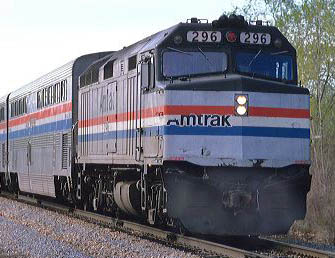 President Obama's proposal to spend $50 billion on transportation infrastructure—including 4,000 miles of rail lines—couldn't be a better expenditure of our federal tax dollars.
After spending two days on the Empire Builder, the long-haul Amtrak line from Chicago to Seattle/Portland, I quickly realized that our investment in trains should be readily and heartily embraced. And, if more Americans were to take such trips, I’m sure they, too, would choose trains as an alternative mode of travel.
Amtrak staff was courteous and responsive to passengers, a bit quirky as train people can be, but absolutely delightful while we all traveled the miles and hours together across the country. Riding the train, especially on an overnight, was romantic and adventurous and we kept to our schedule despite the numerous times we had to yield to freight trains. READ MORE
How I Became a Rail Fan
 |
| Station Stop on the Empire Builder |
This was a memorable trip for me, mostly for its long distance from home, the back and forth swaying of the train that made walking difficult, the toilets that emptied their contents onto the track, and the conical paper cups that held water from the push-button dispenser.
Today, trains have more significance for me than the curiosities of my youth. They are a "green" way to travel and a key component of our public transportation system. They avoid the hassles of freeway driving and the expense of auto parking or the long waits and delays of the airport. And, they are just plain fun to ride. READ MORE
Saturday, January 29, 2011
Some Interesting Books

In an age of erratic weather and instability, people's interest in growing their own food is skyrocketing. The Resilient Gardener presents gardening techniques that stand up to challenges ranging from health problems, financial problems, and special dietary needs to serious disasters and climate change.
Scientist and expert gardener Carol Deppe draws from emerging science in many fields to develop the general principles of gardening for resilience. Gardeners will learn through Deppe's detailed instructions on growing, storing, and using the five crops central to self-reliance: potatoes, corn, beans, squash, and eggs.Learn how to:
- Grow food in an era of wild weather and climate change
- Garden with little to no irrigation or "store-bought" inputs
- Garden efficiently and comfortably (even with a bad back)
- Customize your garden to deal with special dietary needs or a need for weight control
- Make breads and cakes from home-grown corn using original gluten-free recipes (with no other grains, artificial binders, or dairy products)
- Keep a laying flock of ducks or chickens, integrate them with your gardening, and grow most of their feed

Part small business manifesto, part personal finance primer, ECOpreneuring is essential reading for small business owners, prospective entrepreneurs, social entrepreneurs starting non-profit organizations and anyone who dreams of a livelihood based on independence, creativity, passion and a commitment to green practices and sustainability.

In essence, the great work we face requires rekindling the home fires.Radical Homemakers is about men and women across the U.S. who focus on home and hearth as a political and ecological act, and who have centered their lives around family and community for personal fulfillment and cultural change. It explores what domesticity looks like in an era that has benefited from feminism, where domination and oppression are cast aside and where the choice to stay home is no longer equated with mind-numbing drudgery, economic insecurity, or relentless servitude.Radical Homemakers nationwide speak about empowerment, transformation, happiness, and casting aside the pressures of a consumer culture to live in a world where money loses its power to relationships, independent thought, and creativity. If you ever considered quitting a job to plant tomatoes, read to a child, pursue creative work, can green beans and heal the planet, this is your book.

Updated for the second time since 1992, this book, by a trio of professors and systems analysts, offers a pessimistic view of the natural resources available for the world's population. Using extensive computer models based on population, food production, pollution and other data, the authors demonstrate why the world is in a potentially dangerous "overshoot" situation. Put simply, overshoot means people have been steadily using up more of the Earth's resources without replenishing its supplies. The consequences, according to the authors, may be catastrophic: "We... believe that if a profound correction is not made soon, a crash of some sort is certain. And it will occur within the lifetimes of many who are alive today." After explaining overshoot, the book discusses population and industrial growth, the limits on available resources, pollution, technology and, importantly, ways to avoid overshoot. The authors do an excellent job of summarizing their extensive research with clear writing and helpful charts illustrating trends in food consumption, population increases, grain production, etc., in a serious tome likely to appeal to environmentalists, government employees and public policy experts.
Sunday, January 23, 2011
Cities: Kansas City, Missouri

by Hannah Gray
#20
Growth of the City
Settled in 1800s due to location @ convergence of the Kansas and Missouri Rivers
Important in Westward expansion, last place to supply before heading West
Despite border wars of Bleeding Kansas City grew throughout 1850s
Crossroads of the Country with railway bridge over the Missouri River à population x 4 in 50 years
Became 2nd busiest stockyards (after Chicago) and remains so à transfer site for western pastured beef on its way to slaughter in Chicago
Pendergast era 1890-1940 = jazz boom, barbecue, industry, transportation
Post-WWII Dynamics
Decline of rail travel post WWII = city less important
More single-family homes needed
Expansion into surrounding area à decline of urban neighborhoods
Race riots in 1967 à white flight à decline in population til 1990s
After 1990s growth outward
Sustainlane Evaluation
#20 overall
#1 Water Quality
#2 Metro Street Congestion
# 7 Energy & Climate Change Policy
#47 Planning & Land Use
#40 Metro Transit Ridership
#40 City Commuting
Efforts by Mayor’s Office
Green Solution Policy
Climate Protection Plan
LEED for all city-building projects
Energystar for all city housing projects
“Laying the Groundwork”
City Initiatives
Alternative Fuels
Wet Weather Solution Program
10,000 Rain Gardens
Energy-efficient Lights
Traffic Signals
KC Recycles
Nature First- native plants
Mastertrails
Brownfield Redevelopment
Low-Density Urban Sprawl = Major Problem
Redevelopment Around Transit
Imagine KC = dialogues about future urban planning
Consensus on need for more public transit
Public transit à redefine layout of city
Mixed-use community development around transit centers
Visioning
Centers and Corridors
Transportation Goals
Accessibility
Climate Change Energy Use
Economic Vitality
Making Place
Public Health
Safety & Security
System Condition
System Performance
Cities: New York, New York

by Adam Smith
· Overall #5
o Strengths
§ Transit/commuting
§ Land use and planning
§ Knowledge/Communications
§ Waste Management
o Weaknesses
§ Air quality
§ Local food
§ Housing affordability
o “Sustainability out of necessity”
§ ”NYC’s per capita emissions are a third of those in the rest of country because of public transit use, densely packed buildings and smaller homes.”
· Bus Rapid Transit
o Dedicated lane/traffic priority
o Reduce boarding times – “the major time waster on busses”
§ Pay at bus shelter, not while boarding
o Bx12 Route – 98% of riders satisfied
o Many advantages of light rail/subway, but low costs
· High Line
o Converted raised rail tracks
o Now a 1.45 mile long public park
o Well received, talk of implementing similia projects elsewhere
· PlaNYC
o Announced December 12, 2006
o 10 Goals for 2030
§ Create homes for 1 million new New Yorkers
§ Improve transit capacity
§ 10 minute walk to parks
§ Improve water network
§ Fully repair roads, subways, rails
§ Cleaner, more reliable electricity
§ Reduce greenhouse gas emissions by 30%
§ Cleanest air of any big city in America
§ Clean up contaminated land
§ Open waterways for recreation
o Annual reports on Earth Day
· Sustainable South Bronx
o Greening projects
o Education
o Green job training
o Founded by Majora Carter, a McArthur “Genius” recipient
Thursday, January 20, 2011
Cities: Minneapolis, Minnesota

by Roxanne Walker
number one for local food and agriculture
· 18 farmers markets, of which nearly half accept food stamps
· 60-plus community gardens
· More than half of Minnesota’s land area is farmed
The Common Roots Café launched in July of 2007
· Sustainable building: salvaged, recycled, and renewable building materials
· Workers: living wages, health insurance benefits, paid vacations
· Over 80% of the food purchased in 2007 was local and/or organic
o Produce comes from local farmers
o Nearly all dairy and grain products are produced nearby
o Meat is local and free-range or grass fed
o No deliveries from mainline distributors
· Menu changes weekly, depending on local availability or need to sell
Sustainlane.com rated Minneapolis rated in the top ten for
· Grant to pass out 1,800 energy-efficient light bulbs
· Anaerobic digester to produce energy from organic waste
· Number Two bike city in the country (behind Portland) despite bitter winters
· Over 100 miles of bike trails within the city
· Green roofs on city hall, library, and fire station (all LEED-certified)
· Currently 13% of energy comes from renewable sources (goal: 30% by 2025)
· Infrastructure/investment to prevent sewer overflow into Mississippi
Challenges to Sustainability
Sen. Amy Klobuchar (D- Minn) says delisting wolves would let hunting wolves be a source of revenue for the state
Wolf population and deer hunting put severe pressure on moose population
Faster trains between the Twin Cities and Chicago advocated by Obama administration
Wisconsin Gov.-elect Scott Walker declined federal funding
Experts see it as an opportunity for Minnesota to take charge of the route (go through Rochester)
Five-mile stretch of the river that runs north from downtown is lined with scrap yards, industrial buildings, open
spaces, and scattered, isolated stands of trees
Renovation would connect nearby neighborhoods and trails/parks
Area just north of city would keep population concentrated near the city
Renovation would attract business and recreational/residential activity
Cities: Houston, Texas

by Leigh Ann Ulrey
· Rated 36 overall on Sustainlane.com
o 11th in housing affordability
o 11th in green (LEED) certification
o 14th in Metro transit ridership
o 41st in air quality
o 44th in natural disaster risk
Houston is the energy capital of the nation; however, in July 2008 Houston was the leader in municipal purchaser of green energy (25% of energy was moved to wind power)
Energy Efficiency Incentive Program (EEIP)
o An incentive program for commercial buildings to make energy efficient upgrades to their buildings
o Part of an efficiency retrofit movement in the city
Residential Energy Efficiency Program (REEP)
o Gives energy efficiency upgrades to low income homes
Other city efforts
o All light fixtures were switched to energy efficient bulbs in city owned buildings
o LEED certification is required for all construction on city owned buildings
o Plans to continue to increase use of wind power
·
Promoting the use of community electric cars
On-road vehicle remote sensing devices: can measure the exhaust emission from a car as they drive by the device and then light the number up on a screen a bit further down the road.
o The city is giving gift funds to be used towards a new car for low income individuals with a car that does not meet code
SustainableHouston.org is a membership-based organizations that helps create networks of local businesses, famers and community organizations
o They track and measure progress in four key areas of sustainability:
· Fiscal Sustainability
· Community Sustainability
· Environmental Sustainability
· Personnel Sustainability
·UrbanHarvest.org
o An organization that works to educate and facilitate harvest and habitat gardens
o Has helped start 130 community gardens
o Created the first farmers market in the area since the depression
o Has programs at 75 schools
·
Biggest opposition is the city culture itself
o "it seems that Houston is the most polluted and least eco-minded city in the United States"
o "The majority of Houstonians believe that being concerned about the environment is a hippie, leftist or democratic ideal. It is not. This stigma is holding our city back."
Cities: Atlanta, Georgia

· 19th in the US City Sustainability Ranking in 2008
· Leads the Southeast in LEED registered buildings
Beltline Project
1. Background
· Idea came from the thesis of a grad student at Georgia Tech, Ryan Gravel, 1999
· The large issue preventing Atlanta from being more sustainable is urban sprawl. - There are 5,000 people living in the city of Atlanta and 5,000,000 people in the metropolitan area.
· The thesis addressed the need for an infrastructure system that could promote and sustain economic growth in a way that would promote a more sustainable lifestyle.
· The original project would create a 22-mile long loop around city and construct a light rail system around city accompanied by a linear park and 33-miles of multi use trails. Because of the projects growing support many other projects have been added.
· The Beltline began being built in 2006 and in 2010 many walkways and parks connecting parts of Atlanta have been opened up for public use.
· This is a 25-year project, funding has been approved for the first 5 years. It is projected to cost 2.8 billion dollars.
2. Environment
· The project plans on cleaning up over 1,100 acres along the Beltline that have been designated as “brown fields”, areas where the Environmental Protection Agency has declared that it may be complicated to develop because of the presence of hazardous substances, contaminants, or pollutants.
· The added parks will increase Atlanta’s green space by 40%, which will add over 1,300 acres of new park space.
· These parks include retention ponds that protect against flooding
· An old quarry is in the planning stages to become a 2.5 billion gallon water supply that is meant to supplement Atlanta’s water supply and can be supply water for 30 days to all of Atlanta in case of a drought. The quarry will also add 3.000 more acres of park to the Beltline.
3. Transportation
· The Beltline will allow city residents, who prefer not to use a car or can not afford one, to travel to all of Atlanta’s surrounding neighborhoods as well as connect to the already existing MARTA transit system as well as bus roughs.
· The Beltline is expected to reduce Atlanta’s carbon footprint by 665,000 metric tons per year simply by reducing the amount of cars on the roads
· The trails promote people to walk or bike to there destinations rather than ride in a car, which also promotes a healthier lifestyle.
4. Economy
· The Beltline allows for the northern and eastern portions of Atlanta to continue to grow in a way that can sustain its growing population and prevent congestion.
· The project will promote growth in the southern and western parts of the city by creating easier access and will attract simple amenities like grocery stores to areas that do not have easy access to them.
· The project promotes a more even growth through out the city.
· There is a green space job-training program to train workers so that they can get jobs working on the beltline. As of 2010 100% of the graduates of the program have been employed and usually work on projects in there own neighborhoods.
· With new development comes a higher property tax. To take this into account, the city of Atlanta plans to implement the largest affordable housing initiative that has ever been undertaken in the city.
Tuesday, January 18, 2011

Floating Bike Path is One Response to Rising Waters

The bike path is designed out of foamed concrete, which floats on the water but is stable. This may be particularly valuable because of its applicability in the context of climate adaptation.
TreeHugger via Gizmodo
What it's Like to Ride the Fastest Train in the World
Just about every industrialized country in the world has effective, high speed rail transportation. The United States, apart from an East Coast corridor or two, does not. As of early last year, China boasts one of the fastest bullet trains in the world. The train between Guangzhou and Wuhan goes 620 miles (1000 km) in three hours. And the fastest train in the US?
It takes nearly the same amount of time to get to Boston from New York on the Acela Express, one of the fastest passenger trains in the nation. The distance is roughly 1/3 of the Chinese corridor, at around 220 miles.
Two videos at TreeHugger [via Gizmodo]
Two videos at TreeHugger [via Gizmodo]
Subscribe to:
Posts (Atom)