Showing posts with label Agriculture. Show all posts

Monday, March 7, 2011

Young Farmers Movement Gaining Recognition

Article from the NY Times on Saturday about the new generation of farmers emerging, particularly in Oregon and how they are different from the previous traditions of farming of their grandparents' generation.

In New Food Culture, a Young Generation of Farmers Emerges

http://www.nytimes.com/2011/03/06/us/06farmers.html?_r=1&scp=2&sq=farmer&st=cse

" CORVALLIS, Ore. — For years, Tyler Jones, a livestock farmer here, avoided telling his grandfather how disillusioned he had become with industrial farming.

After all, his grandfather had worked closely with Earl L. Butz, the former federal secretary of agriculture who was known for saying, “Get big or get out.”

But several weeks before his grandfather died, Mr. Jones broached the subject. His grandfather surprised him. “You have to fix what Earl and I messed up,” Mr. Jones said his grandfather told him. ..."

Sunday, February 20, 2011

SEED Wayne


SEED Wayne is dedicated to building sustainable food systems on the campus of Wayne State University and in Detroit communities.


SEED Wayne works in partnership with community-based organizations promoting access to healthy foods, urban agriculture, farm-to-institution, and food planning and policy development.

SEED Wayne embraces core university functions in teaching, research, engagement and operations.

Student leadership is central to SEED Wayne’s success.

SEED Wayne projects are located on campus and in the community. Browse projects here.

Our campus projects started with a vegetable and herb garden called the Warrior Demonstration Garden (established 2008) and a pilot farmers market, with two days in 2008. Since then, we have developed two other campus gardens, the St. Andrew's Allotment Garden and the Parking Structure #5 Experimental Garden.

In 2010, we also offer two farmers markets, one weekly and the other monthly.
The weekly market is called the Wayne State Wednesday Farmers Market. The monthly market, offered every third Thursday from June to October, is called the Wayne State School of Medicine Farmers Market.


View our newsletter, Wayne SEEDLING.

Spread the word - download and distribute the SEED Wayne brochure. Click here to view a You Tube video clip of an interview with Director Kami Pothukuchi on SEED Wayne's programs.

SEED Wayne is located in the Department of Urban Studies and Planning.

If you have questions about SEED Wayne, please contact:
Kami Pothukuchi, Associate Professor of Urban Planning
k.pothukuchi@wayne.edu
313-577-4296 begin_of_the_skype_highlighting 313-577-4296

Thursday, February 17, 2011

Food Job and Journal

Check out this job posting at Yale for a Director of Sustainable Food.

Some universities are getting with it!


You may also be interested to see a new publication: Journal of Agriculture, Food Systems and Community Development.


The Journal of Agriculture, Food Systems, and Community Development (JAFSCD: ISSN 2152-0801) is an online international, peer-reviewed publication focused on the practice and applied research interests of agriculture and food systems development professionals and scholars.

Monday, February 14, 2011

Neat video

I just came across this really interesting video from WORKac about what it would take to grow all of New York's food within a 100-mile radius of the city. The plan isn't really practical, but that also isn't so much the point. The figures and approaches are thought provoking, and the general conclusions are also pretty compelling. The whole thing is less than 5 minutes.


The description also mentions MVRDV's work, which is covered in a 4 minute video, and is a pretty good description of why urban ag/vertical farming alone isn't really the answer. Sorry the video isn't narrated, I seem to remember seeing a version that was but can't find it.

Thursday, January 27, 2011

Monsanto answers your questions about the movie Food, Inc

Food, Inc. Movie

Thank you for the opportunity to talk with you about the issues the film Food, Inc. raised regarding Monsanto.
The film highlights important topics. We certainly agree we must have safe food for our families, we have families, too. We should know where our food comes from.

We’ve heard from a number of you who have seen the film during the past several months. You have questions about Monsanto, our business practices, the safety of our products, and our relationship with farmers – who are essential not only to our business success but to global food security in the future – and we’re answering them.

These pages are intended to answer those questions and provide additional information not provided by the film, so you have a more complete picture of what we do and what we are working to accomplish in the years ahead.

READ MORE

Tuesday, January 18, 2011

The Sahara Forest Project

Sahara Forest Project Developed Project image


The Sahara Forest Project proposes to use two separate technologies together,Concentrated Solar Power (CSP) and Seawater Greenhouses, to provide an array of sustainable energy and agricultural solutions, in the usually inhospitable desert environment, through the desalination of seawater into freshwater.


Much more at TreeHugger [via Gizmodo]

Thursday, January 6, 2011

E News: January 6

New Data Reveals Mid-size Cities May Be Hotter For Jobs than Larger Cities


CareerBliss.com released the report Tuesday, detailing its projections for the 20 best hiring cities in America this year. The press release is titled "CareerBliss Data Shows Bigger (Cities) Isn't Always Better For Hiring in 2011"; weird grammar aside, the headline intends to highlight cities like Charlotte, N.C. and Hartford, Conn. that crept into the Top 20 list.
But the top of the list was still dominated by big cities, and Chicago was right up there.

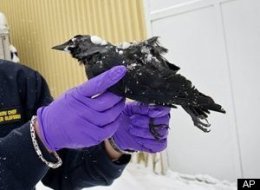
Dead Birds Fall From Sky In Sweden, Millions Of Dead Fish Found In Maryland, Brazil, New Zealand

The Huffington Post, Jan. 5  

UPDATE: Wildlife officials say that even more previously unreported dead birds were found in Kentucky last week.

Millions of dead fish surfaced in Maryland's Chesapeake Bay in the U.S., Tuesday, while similar unexplained mass fish deaths occurred across the world in Brazil and New Zealand. On Wednesday, 50 birds were found dead on a street in Sweden. The news come after recents reports of mysterious massive bird and fish deaths days prior in Arkansas and Louisiana.


Green Design Predictions for 2011


As we kick off 2011, there's no better time to reflect on the past year and to make some predictions as to what the coming year may hold. In what's become a bit of a tradition here at Inhabitat, we asked some of our favorite movers and shakers in the green design space to share their forecasts for what 2011 may mean for sustainable design, architecture and the natural and social environment. From the proliferation of share programs and bike culture, to eco-innovations in technology to make building and energy management easier — read on for what some of the most eminent minds in the green design world have to say about 2011.

Read more: Green Design Predictions For 2011! 2011 Green Design Predictions from Inhabitat – Inhabitat - Green Design Will Save the World


Farm Journal: Frozen Pot Roasts and Kidding Preparations

Donna hurls a pot roast onto the pile

You really have to love farm work to subject yourself voluntarily to a cold, wintry day to chip out frozen water buffalo excrement from the ground and put it on a compost pile! Yet that is what Donna and I did today. 

 Check out my blog, http://www.olgabonfiglio.blogspot.com/

It includes various sustainability articles on small farming, local food (including recent videos), passenger trains, organic food, New Orleans and Hurricane Katrina,  GMOs: